





Chamomile
ESSENTIAL OIL
Couldn't load pickup availability
ROMAN CHAMOMILE OIL: A LIQUID LULLABY FOR SKIN + SPIRIT
Convivial Chamomile Essential Oil is steam distilled from the delicate, diminutive petals of these mini-daisies. The botanical name Anthemis nobilis translates to "noble blooming flower," famed for its cheerful, comforting caress. This flower, with its classic “earth-apple” aroma, has been revered as a hearty herbal helper for millennia. Ancient Egyptians dedicated this golden-hearted flower to the Sun God, and infused Chamomile petals into oil to create solar balms to calm the skin. This ancient reverence continued with the Saxons, who honored Chamomile as one of the nine sacred herbs in their 10th-century Lacnunga herbal manuscript.
While the plant was a staple of monastic physic gardens, its fragrant floral-spirit was first distilled in the early 16th century. Hieronymus Brunschwig, a surgeon and alchemist, and later Valerius Cordus (1540), were among the first to move beyond simple herbal teas to capture the concentrated essence of the flower. They viewed distillation as a sacred art of expressing the flower's spirit from its physical form. This transition turned vast fields of fleeting flowers into dewy drops of ether, capturing the plant's healing intelligence in its most vital and stabilized state.
By the 19th century, Chamomile had earned the title of the Plant’s Physician, as its presence in a garden was observed to improve the health of any ailing plant nearby as Chamomile's caring aromatic molecules traveled through the soil and air to nestle its neighbors in morphogenic, easing esters.
In the mid-20th century, the father of modern aromatherapy, Dr. Jean Valnet, championed Chamomile as an “aromatic-sedative,” praising its ability to resolve "the shocks of the soul.” This clinical reverence was harmonized by the holistic vision of Marguerite Maury, who perceived the essence as "sunshine for the psyche.” She recommended application to the solar plexus to restore a luminous inner-rhythm to spirits frayed by environmental static. In his definitive texts, Ernest Guenther described the oil as a biological masterpiece. He noted: “The oil consists almost entirely of esters... It is one of the most interesting oils from a chemical point of view.” Guenther was right: Phytochemically, Chamomile is a botanical rarity; it is a liquid cordial brimming with 80% esters, more than almost any other substance on earth. These specific esters, primarily 2-methylbutyl angelate (15%) and methallyl angelate (10%), are the "easing molecules" that provide its hypnotic-hay, fruity-floral charm. This is the "gentle healer" of the aromatherapy world: scent-ascension that pacifies apprehension, softens tension, and nestles the nerves while being a serene dream for calming skin care.
"While monoterpenoid esters are common in many essential oils, there is practically no other oil that reflects the nature of esters as exclusively as Roman Chamomile."
— Kurt Schnaubelt, Advanced Aromatherapy
"When someone feels morose, grumpy, discontented, or impatient, chamomile is a good cordial. It is beneficial for people that feel short-tempered, self-involved, overly sensitive, or rarely satisfied."
— Susanne Fischer-Rizzi, The Complete Aromatherapy Handbook
"With its extremely high levels of fragrant esters reminiscent of green apples and late summer fields, Roman chamomile today is seen as one of the classic relaxants ... it is one of the most effective aromatics. Like an abundant Earth Goddess, Roman chamomile engages the gentle warmth and sweetness of lingering late summer days, inviting us to relax in the inherent harmony of life's rhythms, to yield to the innate flow of life and enjoy its fruits of cyclical nature and serenity."
— Peter Holmes, Aromatica
“For children who wake up during the night or have nightmares and want to be held or walked, chamomile is very helpful."
— Susanne Fischer-Rizzi, The Complete Aromatherapy Handbook
ROMAN CHAMOMILE: APPLICATIONS
Chamomile Essential Oil emanates a sweet, ethereal, and mildly herbaceous-hay scent reminiscent of ripe apples, drying hay and summer day breezes. This essence is exceptionally rich in easing esters, making it the gentlest "go-to" oil for comforting and massaging infants and smoothing the sensitivity of delicate skin. Beyond its doting dermal care, Chamomile is an aromatic of calm for body and spirit. Here’s how to use it:
Topical Applications: The dermal diplomacy of Chamomile makes it a skin savior for smoothing sensitivities and resolving "tissues with issues". Its excellent ester content makes it effective for cleansing blemishes and evening the skin tone. For a benevolent daily face wash, mix a few drops with Jojoba to create a "calm-balm" baby massage. To settle the belly-butterflies, apply a drop neat to the solar plexus, or anoint the neck, temples, and shoulders to ease the area.
Inhalations: Diffuse in the bedroom or place a single drop on your pillow before bed to invite a tranquil environment and ward off morose moods. Inhale via a salt pipe or diffuser to experience its systemic relaxant effects directly through the deep breath. Keep a bottle on hand to inhale directly during moments of "short-tempered" impatience or hypersensitivity. In natural perfumery, highlight its hypnotic-hay notes with Clary Sage and Lavender to create dreamy, herbaceous heart notes.
Culinary Invitations: Culinary creations yield to Chamomile’s sweet essence, for a peaceful end to the day, a drop of this easing-essence on your tongue or a spoonful of honey dissolved in warm water before bed.
Botanical Name: Anthemis nobilis
Botanical Family: Asteraceae
Method: Steam distilled
Part of Plant Distilled: Flowers
Country of Origin: France
Cultivation Method: Organic
Composition: 100% Anthemis nobilis
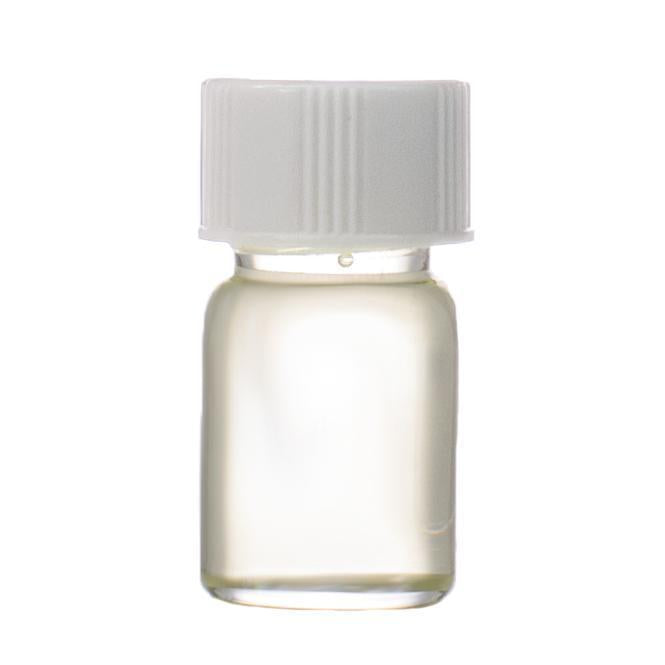
Consistency: Thin
Scent Description: Sweet floral fruit with fresh, summer notes of apples and hay.
In Living Libations: Bedtime Story Blend, Vanilla Chamomile Lover Lips.
Blends Beautifully: Ginger, Lavender, Cardamom, Rose Otto, Seabuckthorn Berry, Ylang, Frankincense, German Chamomile, Cape Chamomile, Bergamot, Lemon, Grapefruit, Geranium, Marjoram, and Hyssop.
KEY CONSTITUENTS: THE EASE OF ESTERS
Phytochemically, Chamomile is a botanical rarity; it perfectly crystallizes the nature of esters more exclusively than any natural substance. The analysis reveals an ester-saturated tapestry totaling over 80% of the oil's composition. This aromatic lullaby is led by significant concentrations of 2-methylbutyl angelate (15%), isobutyl angelate (14%), and methallyl angelate (10%). These primary easing molecules are supported by a complex choir of 3-methylpentyl angelate (9%), isoamyl angelate (6%), and distinct amounts of 3-methylpentyl methacrylate, isoamyl methacrylate, and 2-methylbutyl isobutyrate. A myriad of trace esters, including tiglyl angelate, isobutyl methacrylate, and various propionates, weave together to create this beautiful bioenergetic liquid.
While the esters provide the languid love, a collection of "backup singers" provides structural integrity to the oil. The monoterpenic alcohol trans-pinocarveol (4%) offers skin-toning support, while alpha-pinene (4%) contributes a clarifying molecule. These are grounded by the earthy presence of the sesquiterpene germacrene D (2%). Trace amounts of camphene, borneol, and myrtenal add a final refreshing and restorative touch to this aromatic treasure.
View or download the Certificate of Analysis.
This essential oil is verified, genuine distillation, third-party tested to ensure 100% purity.
THE CALMING CHAMOMILES: A PHYTOCHEMICAL SYMPHONY
These botanical cousins of the Asteraceae family share a floral family resemblance. Chamomile carpets in wild meadows all look beautifully alike, blanketing fields with dainty, mini-daisy-like white petals haloing bright golden centers, topped with the sweet, classic apple-aroma of Chamomile, from the Greek chamaimēlon, meaning "earth-apple." Yet, beneath their pearly petals lives a diverse internal alchemy. While all Chamomiles are cherished for their calming charisma and as skin-soothing elixirs, they embody distinct fragrant phytochemical footprints that guide their specialized enjoyment.
Chamomile (Anthemis nobilis)
Living Libations classic Roman Chamomile with its noble reputation as a restorative remedy and complexion calmer, is primarily defined by a high concentration of esters. It is abundant in 2-methylbutyl angelate (15%), methallyl angelate (10%), and 3-methylpentyl angelate (9%). This high-ester density makes it a graceful essence to soothe restlessness and tune into tranquility. These esters are valued for their skin-softening qualities and “serenity now” disposition. Its herbaceous-ambrosial aroma is welcoming, honeyed, and topped with a warming note reminiscent of "ripened apples on hay" that deepens into a smooth, tenacious, tea-like dry-down.
Wild Moroccan Chamomile (Ormenis multicaulis)
This wild Chamomile variety is the "botanical maverick" of the family, characterized by a more astringent and clarifying profile than the lullaby esters of the classic Anthemis nobilis variety. Phytochemically, it is anchored by a significant monoterpene footprint of alpha-pinene (16%), 1,8-cineole (9%), and santolina alcohol (8%). This variety is a salient skin savior particularly prized for balancing oily complexions and rejuvenating the appearance of scars. Its spiritus emanates a forest-like top note and a tenacious, herbaceous, slightly balsamic dry-down.
German Chamomile (Matricaria recutita)
This cobalt-colored Chamomile essential oil is the inky-blue "go-to" for addressing dermal distress. The botanical name Matricaria recutita means “mother’s plant that blooms again,” honoring this chamomile’s legacy as a comforting herbal helper for the birthing process. The oil's signature blue dew drops are saturated in a substantial 45% concentration of trans-beta-farnesene, a sesquiterpene that defines its deep oceanic calm. Working in tandem is the very special compound chamazulene. While it doesn’t exist in the fresh plant itself, this intense blue compound is miraculously born during the gentle steam distillation process. Chamazulene is a legendary antioxidant; its sapphire hue serves as the ultimate soothing antidote for anything red, hot, or irritated. Combined with alpha-bisabolol (10%), German Chamomile stands as a true-blue "dermal do-all." Its scent is deep and sweet, described as herbaceous-tobacco-like and slightly fruity, with a rich, comforting, hay-like sweetness.
Blue Tansy (Tanacetum annuum)
Often called "Moroccan Chamomile" and sometimes mislabeled as German Chamomile, this oil is a botanical treasure of phytochemical finesse. While it shares the indigo hue of the German variety, its quintessential calm is uniquely anchored by a significant concentration of sabinene (20%) and myrcene (5%). It also contains a robust chamazulene content averaging up to 11% depending on the harvest, though it is completely without the alpha-bisabolol found in German Chamomile. Containing a rare chamazulene and camphor combination at a hearty 12% provides the clarifying, camphorous, and herbaceous synergy that differs from true Chamomiles, making it an essential anchor in skincare formulations for hyper-reactive skin. The unique presence of camphor creates a beautifully camphorous, cooling blend that helps with histamine-like reactions, elegantly easing flare-ups, taking the heat out of puffiness, and quelling itchiness. Aromatically, it is a "superhero-skin-savior" that smells like a sun-warmed orchard of wild apples and honey, offering a fruity-floral sweetness rarely found in a single material.
Cape Chamomile (Eriocephalus punctulatus)
This fragrant, floral dream is a favorite, featuring a luminous aquamarine hue and a complex combination of esters and sesquiterpenes that act as "super soothers". Cheery Cape Chamomile beautifully combines the skin-loving qualities of both Roman and German varieties, containing a delicate, subtle whisper of chamazulene at just 0.40%. This trace amount is precisely what creates its soft, magical azure tone. Each dewy drop bedews a sophisticated, ester-saturated profile uniquely anchored by two exceptional, rare calmative molecules: 2-methylbutyl isobutyrate at an abundant 28% and isobutyl isobutyrate at 14%. These ample aliphatic esters envelop the skin in a serene substance that revives the radiant spiritus of the complexion while giving the oil its laid-back vibes. Its scent easily surpasses its botanical cousins as a fine berry-floral fragrance that is highly sought after in luxury perfumery. Cape Chamomile is completely distinct for its invitingly fruity, honeyed, and light floral notes that are perfectly pleasant for everyone.
ROMAN CHAMOMILE FREQUENTLY ASKED QUESTIONS
Why is Chamomile essential oil associated with sleep?
This "liquid lullaby" rarity is saturated with a unique tapestry of easing esters, totaling over 80% of its composition. These specific molecules, led by 2-methylbutyl angelate (15%) and methallyl angelate (10%), provide the hypnotic-hay and fruity-floral charm that softens tension and nestles the nerves. To invite quietude, diffuse a few drops in the evening to signal the end of the day, use a drop in a bedtime bath, or stir a single drop into a spoonful of honey dissolved in warm water before bed.
Can I use Chamomile on babies and infants?
Celebrated for its gentle caress, Roman Chamomile is the "go-to" essence for infants and is time-tested for being safe and effective for children. Introducing this sweet-apple scent into a nursery via a diffuser creates a fragrant lullaby. For a comforting touch during teething, parents can apply a single drop, diluted in a carrier oil, to the outside of the baby's cheeks, or mix a couple of drops with Jojoba oil to create a "calm-balm" for a gentle infant massage.
What is the difference between Roman, German, and Cape Chamomile?
While all three varieties are esteemed for their calming charisma, they embody distinct aromatic and phytochemical profiles. Roman Chamomile is the ester-excellerant: pleasant and pacifying; benevolent for babies. Inky-blue German Chamomile is the "antidote for anything red," rich in chamazulene to target intense dermal distress with an earthy, herbaceous aroma. Cape Chamomile is an "aquamarine-dream" that combines the skin-loving qualities of both Roman and German varieties with a fine berry-floral fragrance that is highly sought after in elegant serums, feel-good blends, and exquisite perfumes.


Just a moment...
Auto-Replenish is a subscription service. By adding an Auto-Replenish item to your cart you agree to a minimum subscription of three shipments. After this you may cancel at any time in your account. To cancel before this time please contact us.