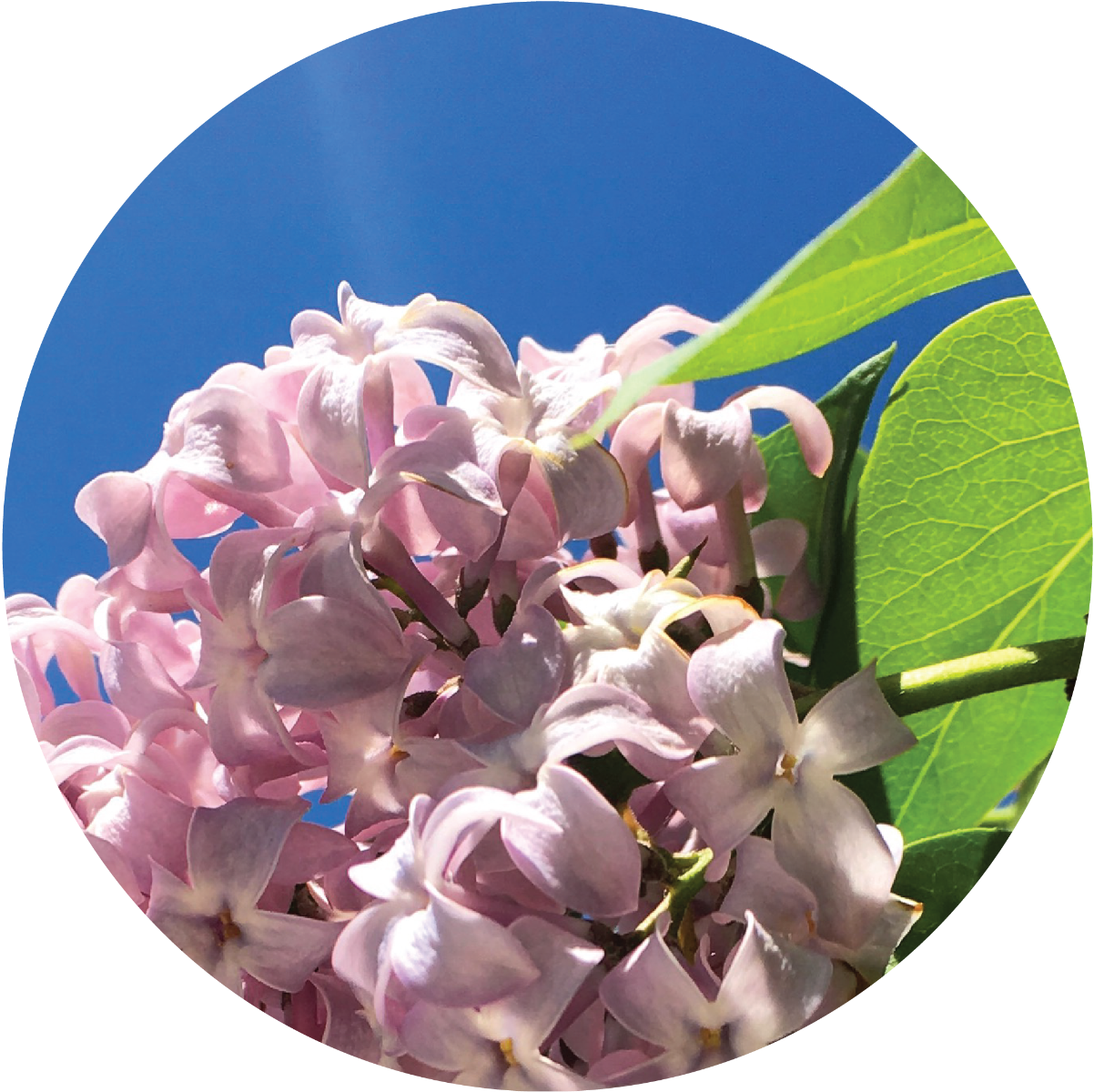
LILAC: THE NATURAL PERFUME FLORAL WAX
The spring-fresh floral scent of Lilac has eluded traditional distillers for centuries. Elusive and shy, virtually every "lilac" scent is a synthetic imitation created by aromachemicals of cinnamic alcohol, terpineol, and lilial. Our uncompromised, certified organic total extraction from Bulgaria presses completely past these petrochemical mimics to capture the genuine, living essence directly from the blossoms, offering the purest essence of Lilac in all its ethereal glory.
This specialized super-critical carbon dioxide extraction is a pure, low-temperature method that coaxes out Lilac’s dense floral waxes along with its essential volatile aromatic compounds. In its pure, uncut form, this process yields a scented solid concrete at room temperature. It is the first extract of its kind to capture lovely Lilac’s famed floral aroma along with the flower’s protective, nutrient-dense plant waxes that brim with skin-supportive constituents.
The Alchemy of the Pure Wax
This raw botanical treasure is curated specifically for natural perfumers and aroma hobbyists. It is a solid essential oil floral wax rather than a ready-to-wear liquid oil. If you are seeking an immediate, effortless experience to use straight out of the bottle as a personal perfume, skincare serum, or deluxe deodorant, we recommend the lovely Lilac Attar and Lilac Lady Perfume.
For the artisan eager to create, working with this solid form requires a touch of hands-on alchemy once it arrives home. This full-spectrum total extraction remains a rich, solid floral wax at room temperature, holding its complex matrix of genuine lilac aldehydes and lilac alcohols close to its chest. To unlock this botanical treasure and make it pliable for your custom formulas, simply secure the cap and gently warm the bottle in a Bain-marie (a warm water bath). Once melted, the wax becomes beautifully fluid and ready to be dissolved into organic alcohol, warm jojoba, or your favorite citrus essential oils, bringing its subtler, hidden notes to the surface to delight the nose.
“The lilac hangs the amethyst tiara…” — Robert Louis Stevenson, The Blackbird
“The stalks of the lilacs bore their thistle-like tufts of bloom, plumes of a pale and broken purple, which had surrendered to the sun the secret of their fragrance, and let it stream abroad in clouds of perfume.” — Marcel Proust, Pleasures and Days
“In the dooryard fronting an old farm-house near the white-wash'd palings, stands the lilac-bush tall-growing with heart-shaped leaves of rich green, with many a pointed blossom rising delicate, with the perfume strong I love.” — Walt Whitman
“Lord Henry went out into the garden, and found Dorian Gray burying his face in the great cool lilac-blossoms, feverishly drinking in their perfume as if it had been wine.” — Oscar Wilde, The Picture of Dorian Gray
LILAC WAX: DISTILLATION DETAILS + APPLICATIONS
Inside lilac's amethyst blossoms reside heavy lipids and protective floral waxes. Touching a lilac petal reveals a distinct, velvety density, a thick epicuticular wax layer evolved to shield the early spring bloom from frost and moisture loss (which is why it is so sublime for skincare). Our total extraction captures and retains the rarity of this floral chemistry. Instead of the free-flowing fluid of a traditional distillation, a rich wax is yielded through the CO2 extraction process, leaving both lighter volatile aromatic molecules and denser compounds cocooned in a waxy molecular mantle of squalene, nutrient-dense phytosterols, and alpha and beta amyrins.
Working with this solid form requires a touch of hands-on alchemy once it arrives home. To create with this material, it must be melted and made pliable. Simply secure the cap tightly and gently warm the bottle in a Bain-marie (a warm water bath). The melting point is a gentle 45°C to 50°C (113°F to 122°F), and it resolidifies superfast once removed from the heat. The moment it liquefies, it is to be immediately mixed with your chosen solvent to keep it fluid. To prevent the wax from going back into solid beads, ensure solvents are prepared: warm your perfumer's alcohol slightly, and make sure your jojoba or carrier oils are at least at room temperature before introducing the wax.
To create your master Lilac blend, the melted Lilac wax can be directly added to organic perfumer's alcohol, a stable carrier oil, or companion essential oils. This wax blends beautifully with any Citrus, Neroli, Sandalwood, Spikenard, Lavender, Marjoram, Jasmine, Rose, Geranium, Ylang Ylang, and Frankincense. If you are crafting a solid perfume, blend the melted wax into warm jojoba oil and melted beeswax. For skincare, Jojoba oil is the best lipid option, as it is the most stable, resistant to oxidation, and skin-compatible.
Perfumery: Once melted, blend into organic alcohols, Jojoba, essential oils, or melted beeswax bases to create bespoke colognes and perfumes. Lilac’s volatile aromatic compounds are cradled within the flower's natural waxy velocity; the scent is subtle and slow-releasing. Exquisite perfumes can be crafted to coax those elusive lilac aldehydes out of their cushion, giving the scent wings, unveiling an enduring, honeyed heart.
Skincare: Prepare a melted concentrate in Jojoba (or use the ready-to-wear Lilac Attar) and then further dilute into more Jojoba or your favorite Best Skin Ever. The natural triterpenic alcohols, squalene, and skin-identical plant lipids inherent to the lilac blossoms create a breathable, occlusive layer that smooths skin for a velvety, luminous complexion.
BOTANICAL PROFILE
Botanical Name: Syringa vulgaris
Botanical Family: Oleaceae
Extraction Method: Super-critical CO2 Total Extraction
Part of Plant Distilled: Blossoms
Country of Origin: Bulgaria
Cultivation Method: Organic
Consistency: Thick, dense, solid floral wax at room temperature. Requires gentle heat to liquefy.
Scent Description: The fragrance of innocence: an ethereal watercolor of sublime, spring-green notes with a cushioned floral heart. While its sillage is soft and restrained, its waxy velocity imparts a tenacious, honeyed foundation that lingers close to the body.
Blends Beautifully With: Jasmine, Rose, Neroli, Ylang, Geranium, Vanilla, Lavender, Melissa, Frankincense, Lemon, Bergamot, Grapefruit, Lime, and Chamomile.
The Phytochemical Footprint
Constituents: Lilac Alcohols A–D, Lilac Aldehyde A, Isoelemicin, Elemicin, Squalene, alpha-Amyrin, beta-Amyrin, Phenylethyl Alcohol, and para-Dimethylhydroquinone.
View or download the Certificate of Analysis.
This essential oil is verified, genuine distillation, third-party tested to ensure 100% purity.
The authentic Lilac signatures of Lilac aldehydes, Lilac alcohols, and phenylethyl alcohol are ultra-rare, volatile monoterpenes that capture the genetic fingerprint of the living Lilac. These scent signatures are the heart of this ethereal bouquet. Serving as the secret structural pillars of the fragrance are the fascinating phenylpropanoids: isoelemicin (measuring a robust 4.46% on the laboratory DB-WAX column) and a dash of elemicin that infuse the blend with a subtle, mysterious, warm balsamic undercurrent, beautifully paired with para-dimethylhydroquinone to imbue a deep, warm sweetness. This forms a protective botanical shield, a trinity of denser triterpenic alcohols and skin-identical lipids containing squalene (4.2%), alpha-Amyrin (3.37%), and beta-Amyrin (2.95%), which is exactly why the raw supercritical extract exists as a dense floral wax at room temperature. When applied topically, these juicier, waxy constituents work in harmony to soften the appearance of scars and leave a lustrous, velvety conditioning layer over the epidermis.
LILAC ESSENTIAL OIL WAX: FREQUENTLY ASKED QUESTIONS
Why is this product a solid wax instead of a liquid oil?
Traditional steam distillation is a heating method that is too strong for delicate aromatics of Lilac blossoms. Super-critical CO2 extraction uses low temperatures and safe pressure to coax out the volatile aromatics alongside the plant's heavier, therapeutic waxes, squalene, and amyrins. This process captures a truer, full-spectrum representation of the living flower.
How does this product differ from perfumery concretes and floral waxes (like rose wax)?
Perfumery concretes are extracted using chemical solvents (usually hexane) to capture the plant's mass, which is then washed with alcohol to separate the liquid absolute from the solid matter. Floral waxes are the alcohol-insoluble byproducts from this process. While they do contain the plant's naturally occurring epicuticular waxes, the juiciness of their prime volatile aromatics has been removed to create the absolute. Our Lilac Wax is entirely different: it is a Total CO2 Extract. Pure, pressurized carbon dioxide gently draws out both the exquisite volatile aromatics and the heavy-weight compounds of the epicuticular lipid layer from the petals simultaneously. It is completely solvent-free, unadulterated, and represents the fulsome aromatic spectrum rather than a chemical fractionation or a byproduct.
How does this product differ from the Lilac Attar Essential Oil?
Born from the ancient perfumery tradition of Attars used to extract elusive blooms like Jasmine, our Lilac Attar co-distills fresh blossoms directly into a liquid receiver oil of pure Sandalwood. This keeps the formulation fluid, pliable, and ready to use straight out of the bottle. This Lilac Essential Oil Wax, by contrast, is 100% pure, undiluted Lilac amorphous extract, replete with rare phytochemicals for bespoke and beneficial skincare blends.